
Learning the Shape of "No"
I didn’t try to learn how to say no. I noticed, later, that I had been doing it for a long time.
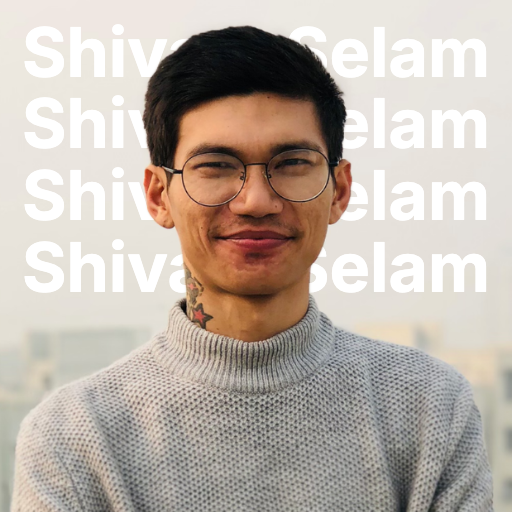 Systems, Growth & Longevity Builder
Medicine dropout turned systems builder. Since 2018, working closely with small businesses redesigning brands, rebuilding digital experiences, and creating growth systems that simplify complexity and unlock revenue.
This work evolved into OmniAI, a company focused on building intelligent teammates like Seminara that give small teams the leverage once reserved for large organizations.

Markets are not abstract forces. They are continuous voting systems. Every day people choose which ideas, products, and companies deserve to survive. The ones that win are rarely the ones with the most tools or the loudest marketing. They are the ones that understand people deeply, remove friction, and build systems that create real momentum.
Most small businesses don’t need more dashboards or software. They need leverage. That belief drives much of the work behind OmniAI and the intelligent teammates we are building. The goal is simple: help small teams operate with the capabilities once reserved for large organizations.
At a personal level, I believe progress requires rejecting complacency. Traditions, systems, and identities should never be treated as permanent. They must be questioned, redesigned, and rebuilt when they stop serving the future.
The new essay breaks down why one-to-one agentic systems fail in live conditions when they are treated like static software instead of guided experiences that must hold rhythm, attention, and progression over time.

Agentic products are not failing because the models are weak. They are failing because we are designing them like software instead of guided experiences that unfold over time.
The world's first agentic host for online presentations to help in sales and activations.
Check Work ↗Building digital teammates for small and growing brands to help in brand discovery, nurture, and sales
Check Work ↗Connecting real skills with real work. A platform designed to move beyond traditional credentials to focus on verifiable competence.
Check Work ↗Experience-led growth for brands. Helping companies find clarity through design, positioning, and behavioral systems.
Check Work ↗Early experiments in growth engineering and digital products under resource constraints. Built first global client base.
The year I pivoted from studying a Bachelor of Medicine and Bachelor of Surgery to racing, music, entrepreneurship, and systems.
Intelligence, for our species, has never been confined to the skull. It has always been distributed. Clay tablets, notebooks, and now AI are all part of the same trajectory.
A reflection on history, human cognition, and the trajectory of AI as an extension of our minds rather than a replacement.
Agentic products are not failing because the models are weak. They are failing because we design them like software instead of guided experiences.
Why one-to-one agentic sessions need game-design thinking to maintain pacing, continuity, and outcome reliability.
I didn’t try to learn how to say no. I noticed, later, that I had been doing it for a long time.

I’ve always been fascinated by selling. Not because I was particularly good at it.

I never learned philosophy from books. Whatever shaped my worldview came from the life I lived.

I was twenty, leaving a medicine lecture one humid afternoon. The hospital corridor smelled faintly of antiseptic and fatigue.

Every great company began small. But not every small company becomes great.

When I first started designing websites and brand identities for clients in Boston and Atlanta, I wanted to do things the right way.

For a long time, I used to think the world moves in straight lines. That once something is built, learned, or discovered, it becomes a fixed part of our collective progress.

If you’ve ever pitched an idea, started a business, or tried something outside the norm, you’ve probably been asked the same question I have my whole life: Why?

For years I thought something was wrong with me. I’d envision things that others couldn’t see.

Hey, it’s Shivam. Today, I want to share a lesson that came to me not from a book, a mentor, or a podcast - but from a crumpled piece of paper.

We live in a world that sells urgency. New phones, instant likes, same-day delivery, quick-fix diets, and 3-month success stories.

I came across the term growth hacking sometime in 2017 or 2018. I was in Mumbai then, and I remember watching two things take off almost overnight: Uber and Google Pay.

If the world was an ocean, what would you be in it? It sounds like a philosophical question, but it’s one that’s been surprisingly helpful in real life.

Mental models are not hacks. They’re not life advice disguised as productivity tips.

There is a quiet revolution happening across the world. One not driven by enterprise tech giants or VC-backed hypergrowth startups, but by ordinary people building extraordinary things.

I was born in Dimapur, Nagaland - a place that rarely appears on the Indian startup map. I grew up feeling invisible.
"You don’t need to know what to do. You need to know what not to do. The right move reveals itself."
"If you know you're going to face the fire eventually, start with the fire itself and make everything else inevitable"
"Metrics aren’t the system. They’re the shadow the system casts"
"Growth is a lagging indicator of truth delivered at speed."
"Where responsibility lives is where judgment is formed."
"Most people pull the rabbit out of the hat once in their life, but the real ones pull it out again and again"
The mental models and frameworks that guide how Shivam Selam approaches growth, systems design, business strategy, and long-term company building. These ideas come from years of experimentation across design, entrepreneurship, music, racing, and technology.
Growth should not start with tactics. It starts with understanding the underlying forces shaping a system — human behavior, incentives, constraints, and momentum. Once those forces are clear, the correct strategy becomes far easier to identify.
Products, companies, and markets behave like systems rather than isolated events. Outcomes emerge from interactions between incentives, constraints, feedback loops, and human decisions. Improving a system usually matters more than optimizing individual components.
Leverage allows small teams to create outcomes far beyond their size. In the modern economy, leverage comes from code, media, distribution networks, and intelligent automation. When used correctly, these tools allow small teams to compete with much larger organizations.
Mastery is rarely visible while it is being built. Most breakthroughs are the result of hundreds of attempts that look like failure from the outside. Just like throwing a crumpled paper into a bin across the room, progress emerges from repeated attempts until the shot finally lands. Skill is often just persistence that lasted longer than doubt.
Many systems fail because they keep adding features, tools, and complexity. Design by refusal focuses on removing what does not matter. By repeatedly asking what should not exist, systems become clearer, faster, and more effective. The best systems are often defined by what they refuse to include.
Markets behave like a continuous voting system. Every purchase, subscription, or recommendation acts as a vote. Products rise or fall based on these decisions, not because of declarations from experts or institutions. Unlike political elections, market voting happens every day.
If a difficult challenge is inevitable, facing it early creates momentum. By starting with the hardest problem first, everything that follows becomes easier and clearer. Avoiding the fire usually delays progress and increases uncertainty. The fastest path forward is often through the hardest decision.
Human identity is not static. It evolves through experience, learning, and reflection. People often believe they must remain consistent with who they were in the past, but meaningful growth requires repeatedly rebuilding beliefs, goals, and self-perception. Progress demands the courage to evolve.
Historically, large companies dominated because they had more people, capital, and infrastructure. Modern technology is changing this equation. Small teams with the right leverage can now operate with capabilities that once required entire organizations. The future of company building may belong to small teams operating with large systems.